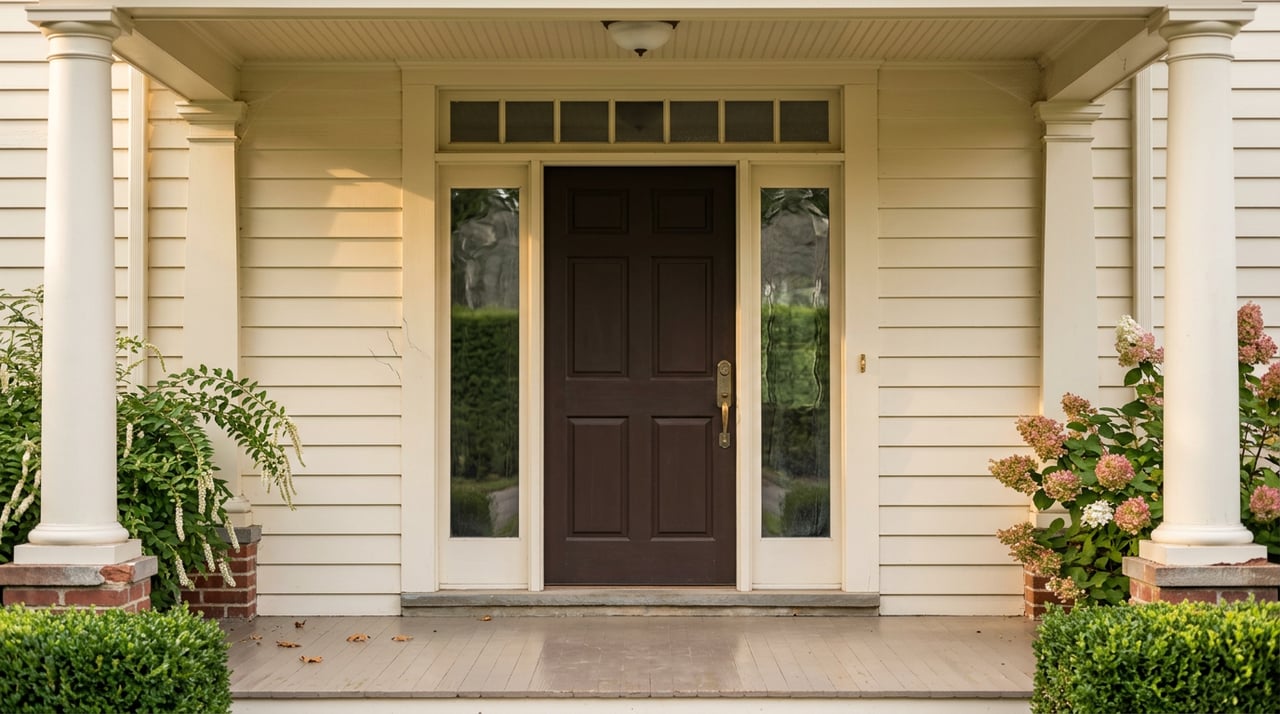
On a Saturday morning, downtown Franklin sells itself. Porches lined with rocking chairs, brick facades that have held their color since before your grandparents were born, sidewalks that actually lead somewhere. None of that scene tells you that the same facade pulling you toward an open house answers to a commission that meets once a month and can hand your renovation plans back with two words: not yet.
That commission is the Franklin Historic Zoning Commission, and the tool it uses is called a Certificate of Appropriateness, or COA. If you are buying or selling inside one of Franklin's local historic districts, the COA process is not a footnote. It is a real variable in your timeline, your budget, and in some cases your offer price, and it behaves the same way whether you are the seller trying to freshen a home before listing or the buyer who just closed and wants to build a porch.
What Actually Requires a Certificate of Appropriateness
Most people assume historic district review only applies to additions or a full repaint. The city's own scope is wider than that. Projects that require HZC review of a Certificate of Appropriateness include:
- Additions such as enclosed rooms, porches, stoops, porte cocheres, and decks
- Alterations or repairs to existing structures that require a building permit
- Site elements including fences, walls, sidewalks, walkways, driveways, and lighting
- Modern features like mechanical equipment, rooftop additions, skylights, security bars, and solar installations
- Interior alterations that change the exterior appearance of the building
- Partial or full demolition, and relocation of any structure
Some minor changes, mostly on rear or obscured facades that do not touch the roofline or footprint, can qualify for a faster administrative review handled by preservation staff rather than the full commission. Everything visible from the street should be assumed to need the full process. The city's Certificate of Appropriateness page lays out this scope directly, and staff, including the Preservation Planner, are available to review a project before you file.
The Monthly Clock
Here is the part that surprises people mid-transaction. The Historic Zoning Commission meets monthly, and applications have to be submitted at least five working days ahead of that meeting just to make the agenda. If the commission denies the request or approves it with conditions, the homeowner addresses those conditions and resubmits for the following month's meeting. There is no expedited lane for a buyer who closed in June and wants the new fence up by August.
Contractors who work this district regularly build that math into their contracts rather than treating it as a surprise. One Middle Tennessee painting contractor that handles historic downtown projects puts the realistic window for a facade repaint Certificate of Appropriateness at 60 to 90 days once you count the meeting cadence, potential resubmission, and the time needed to document paint chemistry and color justification for a board that references the Secretary of the Interior's Standards rather than a fixed approved palette.
That detail matters for something buyers rarely expect: an unpainted brick or stone facade in original condition cannot be repainted on the homeowner's decision alone. The first coat of paint on a facade that has never been painted is treated as a material alteration to the building, which means it goes through the same review as an addition would.
Not Every Historic Street Plays by the Same Rules
Franklin has seven separate locally designated historic districts, adopted individually by ordinance from the Board of Mayor and Aldermen, ranging in size from the five-parcel Everbright Avenue Historic District up to the Franklin Road Historic District, which stretches just under two miles north of downtown. Each carries its own character and, in practice, its own renovation math.
The Adams Street area is mostly Folk Victorian, Queen Anne, and Craftsman bungalow construction from roughly 1890 to 1940, on tighter urban lots. Lewisburg Avenue holds larger estate parcels, some with documented history reaching back to the Civil War era, where the guidelines weigh differently against a bigger footprint. Hincheyville mixes both scales. None of this is cosmetic trivia. A buyer comparing a cottage on Adams Street to an estate on Lewisburg Avenue is comparing two different renovation timelines even before either one files a COA application, because lot size, setback rules, and streetscape rhythm all factor into what the commission is willing to approve.
What This Does to the Numbers
Citywide, Franklin's market as of August 2026 shows roughly 59 active listings against 30 homes already under contract, a pending to active ratio near 0.51, with a median sold price over the trailing six months around $970,000. That is the broad Franklin picture, covering everything from new construction in the master planned communities to the historic core.
Zoom into the historic core itself and the range widens dramatically. A rolling twelve month snapshot of RealTracs MLS data for the downtown historic district, most recently pulled in mid-2026, puts the price per square foot spread between roughly $185 and $886, a gap wide enough that a renovated cottage and an untouched landmark estate barely look like the same asset class. That spread is not noise. It is the visible result of which homes have already cleared the COA process for their systems and finishes and which ones still carry that clock ahead of them. A buyer paying premium dollar per square foot in the historic core is often paying for renovation work someone else already sat through the monthly meetings to get approved.
For a seller, that means pre-listing improvements inside a historic district cannot be treated on the same calendar as a home in Cool Springs or Berry Farms. If a new roof, replacement windows, or a rebuilt front porch is part of the plan to get top dollar, that work needs to start with a call to preservation staff, not a call to a contractor, because the contractor's schedule doesn't control your timeline here. The commission's does.
What This Does to a Buyer's Financing
Buyers who plan to renovate a historic purchase right after closing often lean on renovation financing such as an FHA 203(k) loan or Fannie Mae's HomeStyle Renovation program. Both are reasonable tools, and both add their own layer of process: contractor documentation, an appraisal based on the completed project, and draw inspections as work progresses. Stack a 60 to 90 day COA window on top of a renovation loan's draw schedule and a buyer who assumed a six-week project can find themselves four months in before a single wall gets touched.
A brick facade that has never been painted, a driveway that needs widening, a fence a new owner wants to install along the front line: each of these needs the same Certificate of Appropriateness review as a full addition, because the commission is not evaluating scope. It is evaluating visibility from the public right of way.
If the home was built before 1978, add one more layer. Renovation work that disturbs painted surfaces on a pre-1978 property falls under the EPA's Renovation, Repair, and Painting rule, which requires certified contractors and specific containment practices. Most homes in Franklin's historic core predate that cutoff, so this is closer to a default assumption than an edge case.
The Tax Credit Myth Worth Correcting
A number of buyers walk into a historic purchase assuming there is a meaningful tax credit waiting for them once the renovation is done. There is a federal Historic Rehabilitation Tax Credit, worth 20 percent of qualified rehabilitation expenses, but it applies to certified historic structures used for commercial, rental, or other income-producing purposes. A primary residence generally does not qualify. Tennessee's state-level support leans toward targeted grant funding rather than a broad tax credit, administered through the state's economic and community development programs. Worth knowing before that number shows up in anyone's renovation budget.
A Practical Sequence
Whether you are the buyer or the seller, the order of operations looks the same:
- Confirm which of Franklin's seven historic districts the property sits in, since boundaries and character differ block to block.
- Contact preservation staff before a contractor, and consider attending an informal Design Review Committee meeting to get direction before filing.
- Separate work that needs full HZC review from anything that might qualify for the faster administrative path, mostly limited to rear or obscured facades.
- Build the monthly meeting cycle into your closing or listing timeline, not around it.
- If financing renovation through a 203(k) or HomeStyle loan, tell your lender about the COA timeline up front so draw schedules and appraisal timing account for it.
FAQ
Does every home in downtown Franklin require historic review before renovation? Only homes inside one of the seven locally designated historic districts. A home a few blocks away in a non-overlay neighborhood follows standard city permitting instead.
What if the work is entirely in the backyard and not visible from the street? Some minor items on rear or obscured facades can qualify for a faster administrative Certificate of Appropriateness, but anything touching the roofline, footprint, or visible from the public right of way should be assumed to need full commission review.
Can the process move faster than one month? Not through the standard path. The commission meets monthly, and a denial or a request for changes sends the application back to the following month's meeting rather than a shorter follow-up window.
Does buying a historic home in Franklin mean I get a tax break? Generally not for a primary residence. The federal 20 percent credit is built for income-producing, certified historic structures, and Tennessee's current state-level support runs through targeted grants rather than a broad credit.
Franklin's historic districts hold their value because the rules protecting their character are real and enforced, not decorative. That is exactly why a buyer or seller needs someone who treats the Certificate of Appropriateness process as part of the deal, not an afterthought discovered after the inspection. If you are weighing a purchase inside one of these districts or getting a historic home ready to list, Cherri Nolan can walk the timeline with you before it becomes a surprise. Let's Connect.